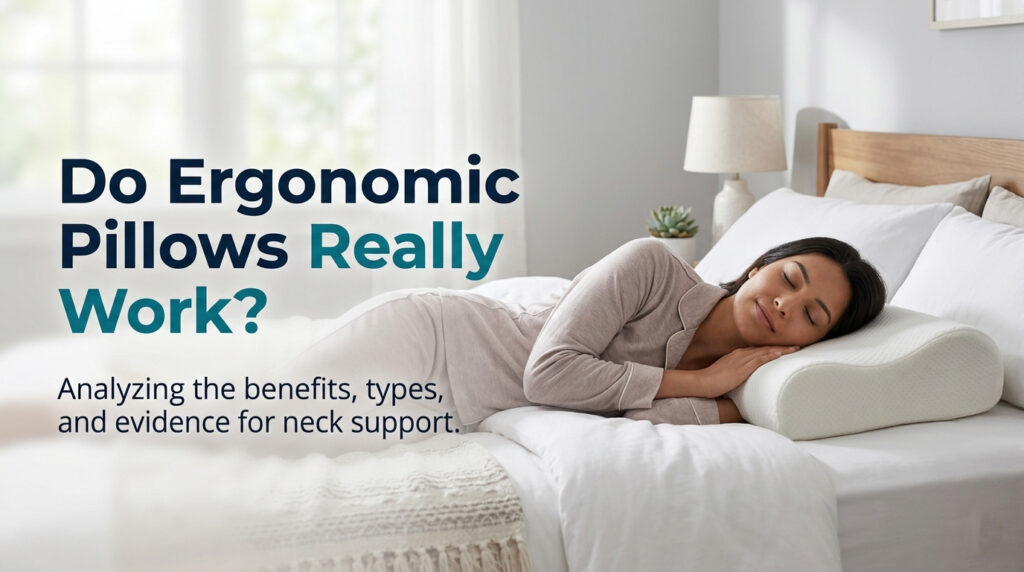
Ergonomic pillows have become increasingly popular among people looking to improve sleep quality and reduce neck pain. But one important question remains: do ergonomic pillows really work, or are they just another marketing trend?
The answer isn’t a simple yes or no. While many users report noticeable improvements, the effectiveness of an ergonomic pillow depends on factors like sleeping position, body type, and the pillow’s design.
In this guide, we’ll break down how ergonomic pillows work, their real benefits, and whether they’re worth trying.
If you want to explore more sleep solutions, you can visit our main homepage for a complete overview of pillow guides in New Zealand: Derila Pillow New Zealand Review
What Is an Ergonomic Pillow?
An ergonomic pillow is designed to support the natural alignment of your head, neck, and spine during sleep.
Unlike traditional pillows that are often flat or loosely filled, ergonomic pillows usually feature a contoured shape. This design helps keep your neck in a neutral position, reducing strain on muscles and joints.
Most ergonomic pillows are made from memory foam or similar materials that adapt to your body shape and provide consistent support throughout the night.
How Do Ergonomic Pillows Work?
Ergonomic pillows work by improving spinal alignment while you sleep.
Instead of letting your neck bend at an awkward angle, these pillows support the natural curve of your cervical spine. This helps distribute pressure more evenly and reduces tension in the neck and shoulders.
Typical features include:
- A central dip for your head
- Raised edges for neck support
- Structured zones for different sleeping positions
Role of Memory Foam in Support
Memory foam plays a key role in how ergonomic pillows function.
It reacts to your body weight and temperature, allowing it to contour around your head and neck. This creates a personalized support system that helps maintain alignment throughout the night.
Why Consistent Shape Matters
One major advantage of ergonomic pillows is their ability to maintain shape over time.
Unlike traditional pillows that flatten or shift, a structured ergonomic pillow continues to provide stable support—essential for long-term comfort and proper posture.
Do Ergonomic Pillows Really Work for Neck Pain?
In many cases, yes—but results vary.
Ergonomic pillows can help improve sleep quality by keeping your spine properly aligned and reducing pressure on sensitive areas. Many users report less stiffness and better comfort after switching.
However, they are not a magic solution. Their effectiveness depends on:
- Your sleeping position
- The pillow’s height and firmness
- Consistent use over time
If you’re curious about real-world performance, you can check a detailed example here:
Derila Pillow
Who Should Use an Ergonomic Pillow?
Ergonomic pillows may be especially helpful for people who:
- Frequently experience neck pain or stiffness
- Have poor sleeping posture
- Wake up feeling tense or uncomfortable
- Need structured support instead of soft cushioning
Back Sleepers
Back sleepers benefit from moderate support that maintains the natural curve of the neck.
Side Sleepers
Side sleepers usually need a slightly higher pillow to keep the spine aligned properly.
People with Posture Issues
Those dealing with posture-related discomfort may find ergonomic pillows helpful in maintaining alignment during sleep.
Pros and Cons of Ergonomic Pillows
Pros
- Supports proper neck and spine alignment
- Reduces pressure on muscles and joints
- Maintains shape over time
- Can improve overall sleep quality
Cons
- May require an adjustment period
- Often firmer than traditional pillows
- Not all designs suit every sleeper
Common Misconceptions
“It Works Instantly”
No pillow can fix sleep issues overnight. Improvements usually happen gradually.
“All Ergonomic Pillows Are the Same”
Different designs provide different levels of support, so choosing the right one matters.
“Softer Is Better”
In reality, proper support is more important than softness when it comes to reducing neck strain.
Tips for Choosing the Right Ergonomic Pillow
If you’re considering trying one, here are a few things to keep in mind:
Match Your Sleeping Position
Choose a pillow that fits how you sleep (back, side, or combination).
Check Material Quality
Look for durable materials that won’t lose shape quickly.
Balance Comfort and Support
The best pillow should feel comfortable while still providing enough support.
Final Verdict: Are Ergonomic Pillows Worth It?
So, do ergonomic pillows really work?
Yes—for many people, they can make a noticeable difference.
They are designed to improve alignment, reduce pressure, and provide consistent support, which may help improve sleep quality over time.
However, they are not a one-size-fits-all solution. Choosing the right design and giving your body time to adjust are key factors.
If you’re considering trying one, it’s worth exploring real product reviews and comparisons before making a decision.
You can start here: Derila Pillow Review